
The Difference Between Yielding and Withdrawing
You kneel, offer…obey.
On the outside, everything looks flawless. Maybe even Instagram-worthy (if that sort of spiciness didn’t get you instabanned). Your Dominant is waxing poetic but your body is on autopilot. The countdown timer of swats is falling, while the part of you that wanted this is curled up in the corner. You’ve disconnected, fogged out, and are wondering if they’re done yet.

Yielding and withdrawing can look eerily similar from the outside; both might involve obedience, stillness, or silence. But the vibe is widely different. Just because your mouth is saying “yes, Ma’am” doesn’t mean your submission is alive and kicking. There’s a massive difference between conscious yielding and checking out while your body just goes through the motions. One is hot, present, and brimming with trust; the other is ghosting yourself mid-scene and calling it obedience.
The difference isn’t always obvious, though. Culture doesn’t exactly set us up to thrive here. We’re taught that showing submission in a scene includes being quiet, compliant, grateful, and never complaining, which makes it really easy to confuse suppression with submission. If you’re socialized as a woman or AFAB (assigned female at birth)? You’ve probably been trained since childhood to equate silence with safety, compliance with love, and self-erasure with value. Add in trauma responses like freeze or fawn, and suddenly, what looks like salacious surrender is actually a well-rehearsed act of survival. In kink, this gets dangerous if we dress it up in latex and call it service. Even an experienced Dom might interpret this moment as continued enthusiastic consent, without realizing that an internal switch has flipped in response. It’s not submission if your nervous system made the choice for you.
Why it Matters

If you’re a fawner, you’re used to saying “yes” to stay safe when you feel uneasy in a situation. That’s valid (and something worth healing)! Empowered submission starts with knowing the difference between a choice and a survival strategy.
If you’re new to D/s it’s easy to think that being “a good sub” means never speaking up. Spoiler: good subs do speak up! And that’s part of what makes them so good.
If you’re growing (and I hope you are!), you already know submission isn’t static. What lit you up last week might fall flat today. That’s not a negative. That’s growth! It’s a better understanding of you and your needs…and THAT is always a good thing.
How Do We Spot the Difference Between Yielding and Withdrawing?
Here’s where it gets slippery.
Yielding
Yielding is an active, intentional choice to surrender or defer to your partner with awareness, presence, and consent. You know you could safeword but don’t want to because you feel safe. You’re right where you want to be, saying “yes” from a place of trust. There’s energy in it. It feels like leaning in. You’re choosing to open yourself, to soften in surrender, and you’re doing it with presence. You’re not just complying; you’re co-creating the moment with every delicious flinch and moan.
What Yielding Looks and Feels Like
Grounded presence: You’re inviting, not just tolerating what’s happening. You know you can stop at any time, and that’s part of why you don’t want to.
Enthusiastic consent: You’re not nodding along like a robot. You’re invested. You’re eager. Your “yes” comes with flavor.
Example: The cane strikes and you gasp. You whimper. You feel everything; the burn, the heat, the flood of trust. Your eyes water and eventually unfocus. Limbs and lips trembling, you go nonverbal, but you’re there. Floating, yes, but anchored in connection.

What Withdrawing Looks and Feels Like
Withdrawing is a passive, often unconscious retreat driven by fear, shutdown, overwhelm, or self-protection. It can be a coping skill, like fawning. It’s the submissive version of “This is fine,” while your emotional house is on fire. It feels hollow. Your body may be performing, but you're enduring, not engaging. You feel yourself fade, but keep going to avoid “ruining the moment.” At the end of it all, though, you’re left numb, disconnected, or worse, full of shame. Not sexy. Not sacred. Just survival in a corset.
Numbness or fog: You’re physically there but mentally out the back door. You might feel emotionally cold, distant, or fuzzy.
Shrinking to fit: You notice emotional, physical, or mental pain you didn’t sign up for (or have changed your mind!) but say nothing because “this is what I asked for,” “they’ll be disappointed,” or “I want to be a GOOD sub and not say no.”
Silent suffering: You don't safeword, but you also don’t feel safe enough to say, “Um, something’s off.”
Example: The impact starts. You count seconds, not strokes. When your Dom praises you, you nod, but you don’t remember what they said. Is it over yet? Your mind wanders everywhere but here. You don’t want to do this anymore but you clench your teeth and take it. Later, when they ask how it felt, you smile, but it doesn’t reach your eyes. “Fine,” you say, though it lands flat. It’s a response scraped clean of meaning, spoken more out of habit than honesty.
A note about dissociation and withdrawal. Dissociation is an automatic response that is often tied to psychological trauma. It can look like, and even cause withdrawal, but withdrawal can happen in people who don't have trauma and dissociation.
Why It Happens (Even in Good Dynamics)
Withdrawing doesn’t only show up in toxic dynamics. It doesn’t require a screaming fight or a crossed boundary to sneak its way into the scene. In fact, it can tiptoe in during the softest moments. The ones that are supposed to feel safe and smoldering with intimacy.
You might be fully consenting and excited going in, only to find yourself wishing it would end halfway through. That can cause a mix of unsettling, unwanted emotions. Not because someone did something wrong, but because you don’t know what switched off. One minute, you were moaning; the next, managing. You’re treading water, maybe even bored, just waiting for them to finish. Smiling because you “should,” performing because you’re expected to, not because you’re still connected to the why.
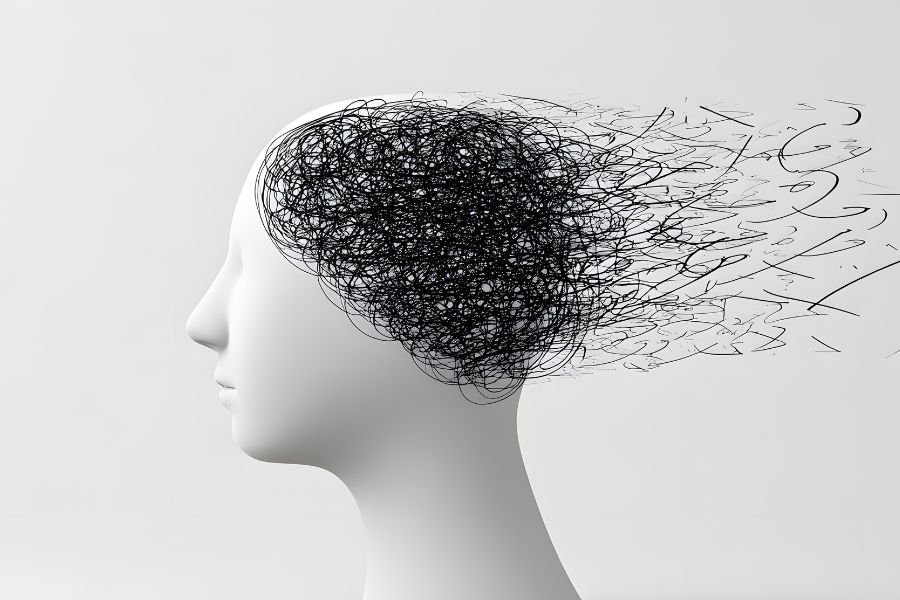
Withdrawal doesn’t always come from drama. Sometimes it’s exhaustion. You skipped breakfast, had a hell week at work, or haven’t slept well in days, but you pushed through because tonight was supposed to be special. You didn't want to disappoint, so you said yes when your body whispered no. And by the time you're mid-scene, you're running on fumes and muscle memory. Not passion. Not presence. You’re trying to be “good” instead of being real. Trying so hard to do it right, to be the fantasy, to give your Dominant the moment they’ve been dreaming of, that you abandon your own experience in the process.
It can even come from wanting to be strong for yourself. To prove something. Maybe you’re pushing yourself to grow. You’re testing a new limit or a new intensity. But without enough support, preparation, trust, or clarity, your system could be triggered to shut the whole thing down.
Or maybe it was a surprise. The kind that’s meant to be good; a new toy, a new roleplay, a new title whispered into your ear with reverence. But if it caught you off guard, even the sweetest surprise can poke an old wound, a tender spot you didn’t know still ached. And that tender spot, if it hits just right, will pull you out of the moment before your mind has even caught up.
Sometimes in a scene, we aim to paint a Picasso…only to discover we’re actually finger painting. That’s ok! The unexpected happens. We run into problems when our expectations don't flex with the realities we’re experiencing. No matter how it starts (and this is by no means an exhaustive list), withdrawal has one guaranteed result: you ghost yourself. And your Dominant? Unless you tell them, they’re none the wiser. They’re responding to the version of you that’s still kneeling in front of them, not the part of you that quietly left the room three minutes ago.
Subspace or Withdrawal? Knowing the Difference

But I like rough play. Does that mean I’m withdrawing? Not necessarily. You can scream, sob, beg, crawl, and still be completely present. You can play with CNC, degradation, and humiliation, and be deeply attuned. Withdrawal isn’t about intensity. It’s about disconnection.
Just like yielding, subspace and withdrawal can look incredibly similar from the outside, too, making it difficult for a Dominant to distinguish between them. Both can involve glassy eyes, slowed responses, soft voices, and that distant, floaty vibe. But the difference isn’t in what it looks like, it’s in how it feels.
Subspace can feel different for everyone. Some report feelings of melting deeply inward. Others feel expansive, like they're on a higher plane of existence. While some completely check out of themselves in a good way. It’s euphoric. You’re drifting, but you’re also safe, and deeply connected. There’s a sense of trust holding you while you float. You’re high on surrender, not hiding from reality. It can be deep and intense, and yes, you may need help coming down, but you’ll usually feel blissed out, not shut down. Even if your brain shuts off and you go nonverbal (which is common with subspace), there’s still a sense of connection and calm.
Withdrawal feels isolating and emotionally distant. You may feel flat, like something got missed, crossed, or shut down. You may be going quiet to stay safe, or because your nervous system hit the brakes without your permission. Afterwards, you're left feeling unsettled, distressed, or even dreadfully ashamed.

Both states deserve care, but not the same kind. If you're not sure which one you're in, check in with your body and your gut.
And Doms?
Don’t assume quiet means everything’s great. Sometimes it means the signal got lost. Trust your gut. If something feels off, it probably is! Better to pause and reconnect than to assume everything’s fine because the submissive hasn’t safeworded. Silence doesn’t always mean consent, sometimes it means survival.
Check the emotional current, not just the behavior. Subspace usually comes with a softness, susceptibility, or even giggles and silliness. Withdrawal carries tension, silence that feels thick instead of dreamy. One feels like openness; the other, like a wall going up. You don’t have to interrupt the scene to do this. Pay attention to the vibe, your sub’s emotional cues, and how they respond to your bid for connection. A sub in subspace may be slow, but they’re still connected. They’ll squeeze your hand, flutter their eyes, or hum when touched. A withdrawn sub may seem unresponsive, vacant, or cold.

When in doubt, ground it in connection by checking in. Try something simple like, “You still with me?” or “Want to breathe together for a second?” A sub in subspace will usually respond warmly or lazily, even if they’re nonverbal at this point. Withdrawal might result in no answer, verbal or otherwise, or a yes with no energy of truth behind it.
How to Catch Yourself in Withdrawal
You can’t fix what you can’t feel. When you're in the middle of a scene, especially one that’s physically intense, sexually charged, or emotionally layered, catching the moment you start to drift away from yourself can be damn hard...but not impossible. Learn to recognize the quiet signs before they become trauma monsters.
Is your jaw clenched? Are your shoulders creeping up toward your ears? Is your breath caught in your chest like it’s trying not to make noise?
That maybe a distress signal. Your body’s talking. Are you listening?
It may mean a good time.
Maybe not.
Withdrawal isn’t always dramatic or immediate. Sometimes it sneaks up on you, slow and quiet, like fog rolling in. Maybe it starts as subtle resistance; a flicker of discomfort you don’t name, a moment of disconnection you push past. Soon, however, you’re watching the scene like a movie instead of living it. This is a flag. It’s your system doing what it knows to do when something feels off. Even if you can’t name why just yet.
To catch yourself in that shift, practice tuning into your cues before you play. Start outside the dungeon. Practice noticing micro-withdrawals, those tiny moments when you feel yourself shrinking or mentally ducking out in everyday life. What does that actually feel like in your muscles, your breathing, your posture? Get familiar with the subtle signals of disconnect so you can recognize them in the heat of the moment. The sooner you catch them, the easier they are to redirect. You might be one grounding breath, one whispered check-in, one hand squeeze away from reclaiming your submission.

After a scene, if you’re feeling numb, ashamed, or like you disappeared halfway through, don’t brush it off. Ask yourself some real questions, Was I present for that? Did I feel connected? Did I feel like I had a choice, not just obligation? If the answer is no, that’s not a submissive inadequacy; that’s valuable information. That’s your internal compass saying, “Hey, we went off course somewhere.” Now’s your chance to listen and get curious.
Without judgment, dig in. Were there triggers I missed? Did I override my own discomfort because I didn’t want to disrupt the vibe? Was I tired, hungry, or overwhelmed? Did I rush into play without the proper headspace? These are useful clues, not excuses. The more you can name what nudged you toward withdrawal, the easier it becomes to navigate next time.
Self-awareness isn’t always sexy, but it is empowering. The more fluently you speak the language of your own body, the more confidently you can advocate for your needs without breaking the dynamic (and without breaking yourself). Empowered submission requires empowered awareness; catching yourself in withdrawal isn’t just self-care, it’s how you protect the depth, heat, and trust that make your dynamic worth showing up for in the first place.
How to Reclaim Yielding as a Choice
The reclamation, the conscious act of choosing your submission moment by moment and deciding that your surrender is a gift, not a given? This is empowered submission. When you find yourself disappearing into your role or caught in old scripts, running on autopilot, pause. Ask yourself, “Am I here?” Not in the room. Not in the role. Here. In this moment. Inside yourself. If the answer feels fuzzy, take a beat and ground back into your body. That grounding can be as simple as a slow, deliberate breath reeling you back to the present. Reclaiming your presence is not an interruption to your submission; it is the very foundation of it.
Yes, this also means using your voice, or your agreed-upon signals. A safeword isn’t a punishment. It’s a partnership tool. A well-placed “yellow,” a hand squeeze, or dropped handkerchief can recalibrate the entire scene. Communicating mid-scene isn’t a detour from devotion. It’s a declaration that your submission is active and anchored in trust.

If you know that you’re prone to check out, or if you’ve ever left a scene wondering what just happened, consider building rituals that support your presence. Pre-scene grounding can help you arrive fully in your body. Mid-scene check-ins don’t have to break the vibe; they can be the vibe and remind you this is co-created, not one-sided. And post-scene decompression, whether it’s through cuddling, journaling, or a debrief, can help you track where you went and how you got there. These aren’t just cute little add-ons, they’re the hard point that makes falling feel safe.
More than anything, stay curious about your “yes.” Ask yourself why you’re yielding in this moment. Is it because you’re turned on by the dynamic? Because you feel safe and seen? Because it lights you up and deepens the connection? Or is it because you’re trying to avoid rocking the boat, afraid of being “too much,” or just don’t know how to say no without feeling guilty?
Yielding from trust is powerful. Yielding from fear is a warning light.
There’s nothing submissive about abandoning yourself to keep the peace. Self-abandonment can lead to serious issues like low self-worth, anxiety, depression, and a loss of your authentic self. So slow it down. Reclaim your yes. Reclaim your no. Reclaim the right to pause, reset, and re-engage when you're ready. Your submission is not a performance. It’s a practice, one that deepens each time you choose it with clarity, curiosity, and care. Because when you yield from a place of choice, everything changes. Your power isn’t being handed over blindly. It’s being invested with intention. When done correctly, your surrender doesn’t just feel sexy, it feels sacred.
How Doms Can Encourage Empowered Submission
Empowered submission is built, breath by breath, scene by scene, in the way presence is held and truth is welcomed. One of the most powerful things you can do as a Dominant is to recognize when your submissive might be slipping into performance mode. If the words sound too rehearsed, the tone feels flat, or everything suddenly sounds like a line from a bad erotica novel, pause. Gently interrupt the scene and create space for authenticity. Performance can be erotic, but not when it’s masking disconnection. Empowered submission doesn’t come from delivering the perfect scene monologue. It comes from honesty, even when it’s inconvenient.
This means genuinely checking in. Not with a box-ticking “You good?” but with open-ended curiosity. Ask questions that invite texture, instead of habitual responses. “What felt good?” “What caught you off guard?” “Did anything feel off?” You’re looking for connection, not fishing for compliments. Listen with both ears and your full attention, even when the answers are messy.
Especially then.
You’re not training a show pony (or maybe you are!) you’re building a dynamic that can handle truth. Let it breathe enough to hold real-time reactions, stumbles, questions, even resistance.

Because when a submissive stays present, even in vulnerability or uncertainty, that’s where the real fire is. When they offer that truth, when they speak up, shift the energy, or even admit they weren’t fully present, treat it like the gift it is. Thank them. Celebrate the feedback. Make it part of the fabric of your power exchange, not a disruption. Too many dynamics fall apart because honesty is only welcomed when it’s flattering. If you want submission that’s alive, not just compliant, you’ve got to create a space where the whole person is welcome.
This kind of Dominance isn’t always flashy. It’s not the stuff that wins Leather Awards. But it’s the backbone of empowered, sustainable D/s relationships. It’s what keeps a submissive coming back. Not because they have to, but because they want to.
Conclusion
At its best, submission is choosing, again and again, to show up fully with the kind of presence that makes power exchange electric. Yielding is a sacred act, not because it’s obedient, but because it’s conscious. You’re there for it. Mind on. Heart open. Body tuned in.
Withdrawing, on the other hand, strips that magic away. Without presence, submission is just a ghost in a pretty collar. It might look obedient, but underneath the surface, it’s hollow. It’s not always easy to spot. Especially when the outside looks picturesque enough to hang on the dungeon wall. That’s why we do the work, though, not to chase perfection, but to protect what’s real.

This goes deeper than just scenes too. It’s about building dynamics where people stay present with each other, where honesty is welcome, where vulnerability isn’t punished, and where “I’m here” means something. Whether you’re a submissive learning to hear your body’s cues, or a Dominant learning to read between the lines, the goal is the same: keep the connection alive. The point isn’t to grit your teeth and get through it, it’s to know when to pause. To notice when the spark dims, when the silence gets too loud, when something inside you starts backing away. That’s not the beginning of the end. That’s the invitation. Take it.
Pause.
Breathe.
Reconnect.
Because the kind of submission that endures is the one that senses the disconnect and speaks, even in a whisper, to stay tethered. To stay connected.